Love this.


Love this.
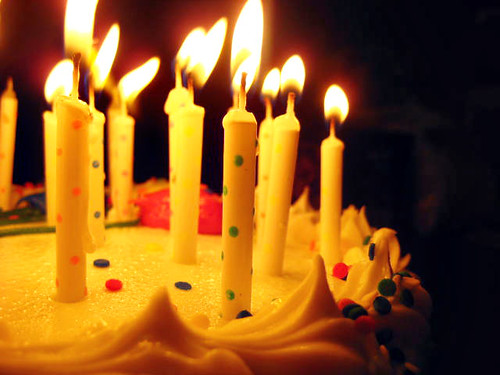
I’d like to see 9999 candles on a cake!
Actually, I guess tomorrow is the big day. Maybe I’ll post again then :-).
Bonus points for:
I’ve posted on infinite series a few times before. But I was inspired to touch on the topic again because I saw this post, yesterday, over at the Math Less Traveled. Actually, the post isn’t really about infinite series as much as it is about p-adic numbers and zero divisors. I’m excited to read more from Brent on this subject. But I digress.
The point I want to make with this post is that students struggle with wrapping their minds around convergent infinite series, and yet they live with them all the time. Students have inconsistently held beliefs about infinite sums.
The simplest convergent series is a geometric series 


for 
But this proof isn’t very satisfying for the student encountering infinite series for the first time ever. Evaluating the limit feels like ‘magic.’ The idea of adding up an infinite amount of things and getting a finite value is unsettling. I admit, it sounds like quite a lot to swallow. That being said, however, students have no problem declaring the infinite series
to be 
Once they finally shake their denial, they can more easily accept the convergence of other infinite series like 


So there it is. An inconsistently held belief about infinite sums. To the student: You cannot have it both ways. Either you must agree with, or deny, both of the following equations:
But to believe one equation is true and the other is only ‘kind of’ true is inconsistent. I rest my case. 🙂
Wow, if the title of this post didn’t grab you, I don’t know what will. Pretty riveting, right? Has anyone ever thought of teaching math with applications? </end sarcasm>
This is the basic thesis of a recent article from the NY Times, “How to Fix Our Math Education” by Sol Garfunkel and David Mumford:
THERE is widespread alarm in the United States about the state of our math education. The anxiety can be traced to the poor performance of American students on various international tests, and it is now embodied in George W. Bush’s No Child Left Behind law, which requires public school students to pass standardized math tests by the year 2014 and punishes their schools or their teachers if they do not.
All this worry, however, is based on the assumption that there is a single established body of mathematical skills that everyone needs to know to be prepared for 21st-century careers. This assumption is wrong. The truth is that different sets of math skills are useful for different careers, and our math education should be changed to reflect this fact.
Today, American high schools offer a sequence of algebra, geometry, more algebra, pre-calculus and calculus (or a “reform” version in which these topics are interwoven). This has been codified by the Common Core State Standards, recently adopted by more than 40 states. This highly abstract curriculum is simply not the best way to prepare a vast majority of high school students for life.
For instance, how often do most adults encounter a situation in which they need to solve a quadratic equation? Do they need to know what constitutes a “group of transformations” or a “complex number”? Of course professional mathematicians, physicists and engineers need to know all this, but most citizens would be better served by studying how mortgages are priced, how computers are programmed and how the statistical results of a medical trial are to be understood.
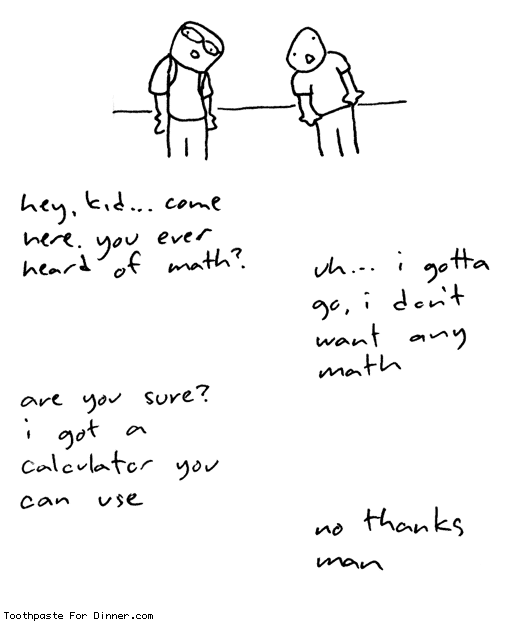
from toothpastefordinner.com
To be fair, the real thesis–if you read further in the article–is that we should primarily teach applications and math can swoop in and rescue us if and when it’s needed:
Imagine replacing the sequence of algebra, geometry and calculus with a sequence of finance, data and basic engineering. In the finance course, students would learn the exponential function, use formulas in spreadsheets and study the budgets of people, companies and governments. In the data course, students would gather their own data sets and learn how, in fields as diverse as sports and medicine, larger samples give better estimates of averages. In the basic engineering course, students would learn the workings of engines, sound waves, TV signals and computers. Science and math were originally discovered together, and they are best learned together now.
If you haven’t gathered already, I don’t agree at all with this thesis. It’s my opinion that math should be taught as math, respected as its own field of study, and a valuable part of a high school liberal arts curriculum. Students should value math for its inherent, abstract beauty. Applications are of course a must in any course. But I find that in the text resources I’ve used, the applications are often contrived. Extremely contrived. Doing math should feel like playing a game, like working on a puzzle, or like arguing.
In fact, when high school students ask why are we learning this?, I FIRST respond with the things I just said: It’s part of a liberal education; it will make you a well-rounded, intelligent person who can hold conversations with other smart people in other fields; and it’s fun. I mention SECOND what applications exist for the math we’re learning. For high school students, if we’re honest, most of them will never need any of the math we’re teaching. Seriously. If you’re not working in a math or science field, when was the last time you had to factor a polynomial?
The authors go on to say “Science and math were originally discovered together, and they are best learned together now.” But this is not universally true. In many cases, the ‘useless’ math was developed first (think of number theory for instance) and then only later were applications discovered (think of the RSA or El Gamal public key encryption schemes).
So why learn math? There was a nice post about this yesterday on one of my new favorite blogs, dy/dan, titled “Cornered By The Real World.” He highlights this great article by Samuel Otten in this August’s Math Teacher magazine. I highly recommend reading the whole article. As a taste, I’ll include the same snippet that Dan shared:
I believe that thinking and acting as if the justification for teaching and learning mathematics is found solely in everyday applications can be dangerous. Mathematics does not exist only to serve other professions, nor is it merely a collection of algorithms and procedures for dealing with real-world situations. Such a mind-set essentially paints our discipline into a weak and lonely corner and leaves undefended many of its greatest aspects.
I could say more about this, but I’ll spare you. I’m passionate about making math a subject worth learning all on its own. If I say more, I’ll start to sound like Paul Lockhart.
Here’s a recent article from NewScientist.com, Prize awarded for largest mathematical proof by Stephen Ornes:
The largest proof in mathematics is colossal in every dimension – from the 100-plus people needed to crack it to its 15,000 pages of calculations. Now the man who helped complete a key missing piece of the proof has won a prize.
In early November, Michael Aschbacher, an innovator in the abstract field of group theory at the California Institute of Technology in Pasadena will receive the $75,000 Rolf Schock prize in mathematics from the Royal Swedish Academy of Sciences for his pivotal role in proving the Classification Theorem of Finite Groups, aka the Enormous Theorem.

from graphjam.com, as usual 🙂
At least, this is true for students that don’t go to RM. I’m sure most students at RM use their calculators for exclusively academic purposes. Right? Right?
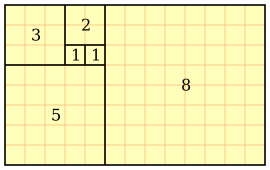
“I feel like this year’s Fibonacci conference will be as big as the last two combined!”
In related Fibonnaci news, here are three recent blog posts having to do with Fibonacci:
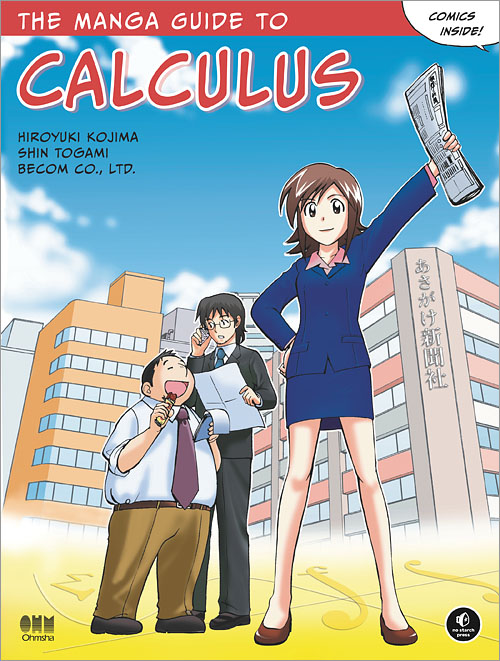
This summer I finally finished reading the Manga Guide to Calculus by Hiroyuki Kojima and Shin Togami. Here are my two cents:
The Manga Guide to Calculus is chocked full of great mathematics and lots of quality comic art (the author went to great lengths to ensure it was authentic manga, with illustrations by popular artist Shin Togami).
That being said, I don’t think anyone could ever learn Calculus using this book. In fact, I think Kojima must know that. He never claims this can be used as a textbook replacement. The math isn’t presented in a very systematic way, and there are very few real exercises for the reader. Right from the beginning he puts heavy emphasis on linear approximation. He takes a very different approach to presenting Calculus than a math book would. It is a story most of all. Kojima, in his preface, says its a great book for those who already have Calculus knowledge–both for those who love Calculus and for those who have been “hurt by it.” I tend to agree.
As for the story, well, it’s a bit contrived. But what story that tries to smuggle in some math doesn’t seem a little contrived? Sometimes it’s a bit of a stretch and the story suffers. You should still give it a chance, though.
So to those looking for a Calculus textbook, you need to look elsewhere. For instance, I was looking for things I might be able to use in the Calculus class I teach, but couldn’t find much usable content. But for those interested in math and are looking for a fun read, I would recommend picking it up.
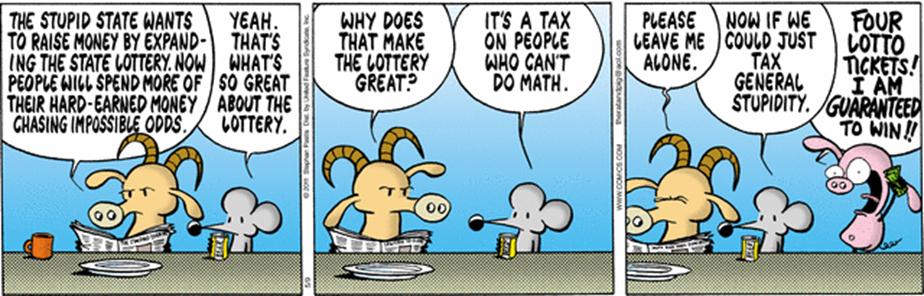
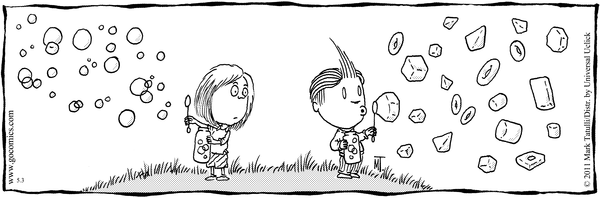
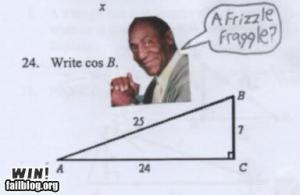
This is a bit of an end-of-the-summer clean-out post. I’ve had people (mainly my brother Tim and my dad, Gene) sending me cool/funny math images and I’ve been meaning to share. So here goes:
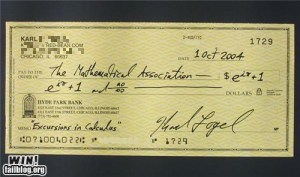
You may have already seen this check. It's still funny, though.
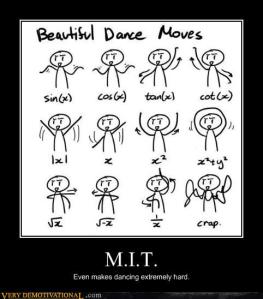
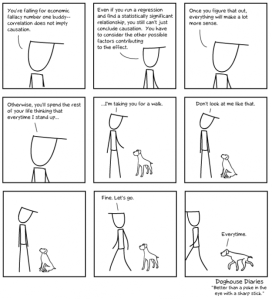
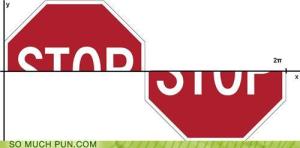
Wasn’t sure if this had made its way around the math blogging community yet. It’s awesome!
And yes, it really does work. There’s a great discussion about it, including lots of different renderings from various math software at math.stackexchange.com.




 Random Walks