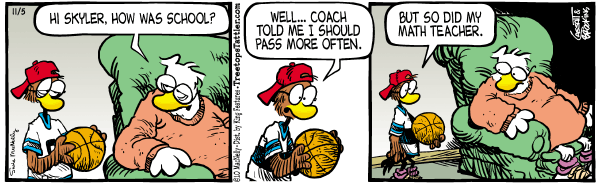
Good news for Montgomery County

I think this is good news for our county schools in Montgomery County, Maryland:

Montgomery County schools to push basic math to prepare students for algebra

By Michael Birnbaum

Washington Post Staff Writer
Friday, November 5, 2010; 12:00 AM

Montgomery County long has pushed its students to take ever-more-challenging math at ever-younger ages. Now educators will back off in the hope that more time and depth with the basics will yield payoffs in high school and beyond, school officials said Thursday.

Elementary and middle school students will no longer skip grade levels in math in large numbers. Instead, they will spend extra time on fundamental mathematical concepts that will better prepare them for Algebra I in the eighth grade and advanced math topics in high school. The school system aims to increase the number of high school students taking courses such as calculus and statistics.

The new direction comes as part of a sweeping set of recommended changes in the math curriculum released Thursday. Some of the recommendations cost money and require school board approval. Others, including the change in math acceleration, do not, and will be implemented quickly, officials said.

“Some students were placed in classes, and perhaps they weren’t as prepared as they should have been,” said Frieda Lacey, deputy superintendent of Montgomery schools, who sat on the work group that wrote the report. She said it was better to tackle topics in greater depth.

more..

And I wonder if this will be a growing trend. Are other math teachers out there sensing a turning of the tide in curriculum? I know the new Common Core standards make this move, toward a more in-depth approach. So perhaps this is a national turning of the tide. On the face, I think this seems like a good direction in which to go.

Random walks around the web

Here are a few noteworthy posts I’ve seen in the math blogosphere recently:

  • Denise at Let’s Play Math asks us to solve some chess puzzles.
  • Dave at Math Notations gives us a recursive sequence to think about.
  • There are two new problems at Math Challenges, here and here.

Funny Little Calculus Text

Dr. Robert Ghrist, professor of mathematics at U Penn is writing a Calculus text–the Funny Little Calculus Text (FLCT for short). The FLCT not your typical Calculus text. Check out his incredible, artistic, funny, and mathematically elegant work-in-progress here. He currently has completed these short little chapters, all of which are a delightful read:

Ghrist lectures in a similar style, with a tablet PC. And yes, his handwriting is really awesome.

NOTE: I’m updating this post today (1-10-2013) because I’ve just noticed that Ghrist has placed these files behind a (very low) pay-wall. They are STILL worth checking out!! Pay for them for goodness sake! 🙂

[Hat tip: Matthew Wright–my good friend, and one of Ghrist’s grad students]

Tower of Terror!

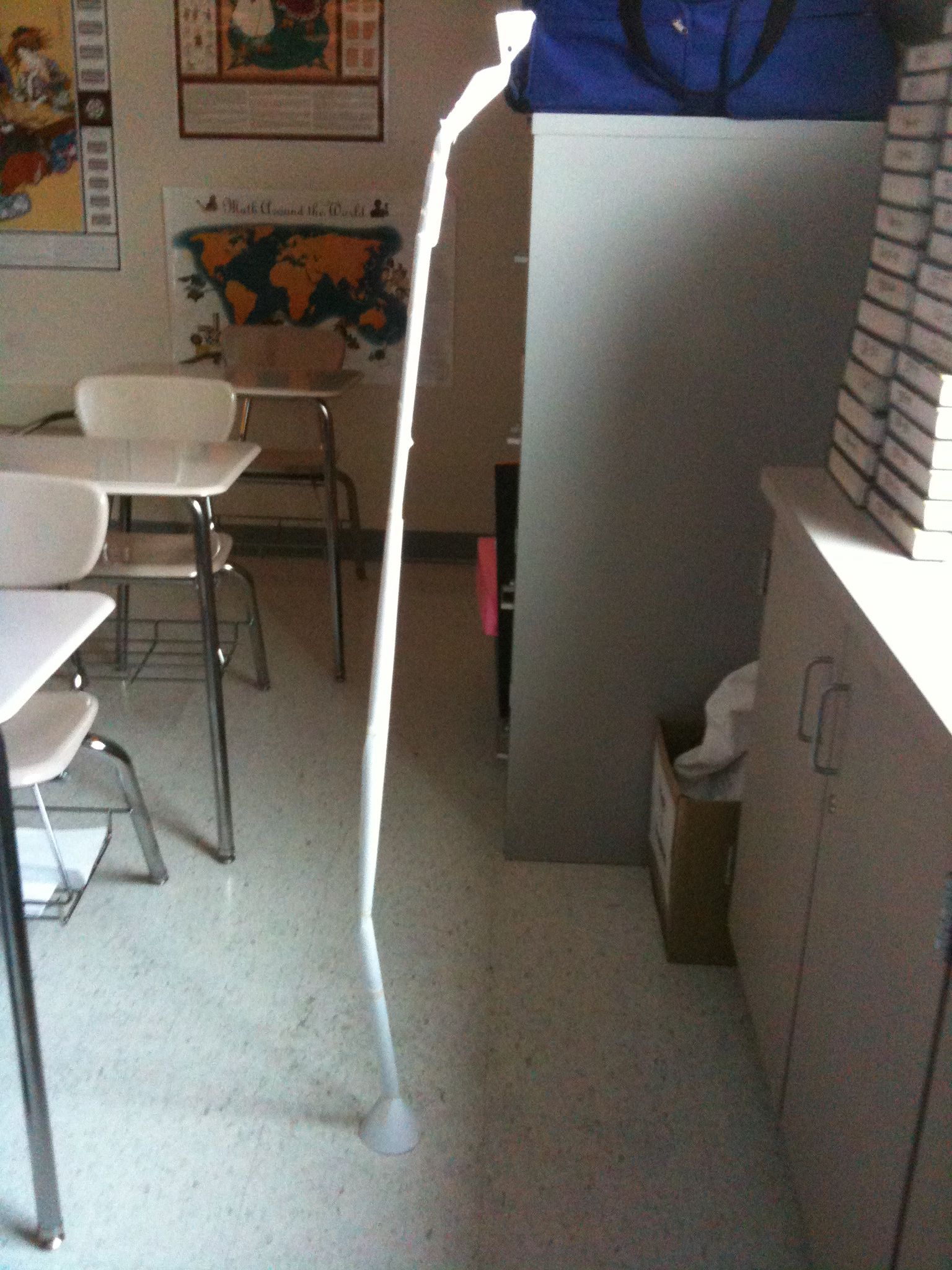
Today we had a “Tower of Terror” competition in our Calculus classes (just for Halloween fun :-)). The rules are: You get 5 pieces of 8.5″x11″ paper and 8″ of masking tape. The goal is to build the tallest free-standing tower.

Here’s a photo of the best tower from all the classes, standing at an amazing 57″. Great job, ladies!

The Math of Roller Coasters

Reposted from Wired.com:

Designing a good roller-coaster loop is a balancing act. The coaster will naturally slow down as it rises, so it has to enter the loop fast enough to make it up and over the top. The curving track creates a centripetal force, causing the cars to accelerate toward the center of the loop, while momentum sweeps them forward. Loose objects like riders are pinned safely to their seats. The acceleration gives the ride its visceral thrill, but it also puts stress on the fragile human body—and the greater the velocity, the greater the centripetal acceleration.

Coney Island’s Flip-Flap Railway, built in 1895, reached a neck-snapping 12 times the force of gravity at the bottom of its loop—more than enough to induce what pilots call G-LOC, or gravity-induced loss of consciousness. In other words, riders often passed out. In fact, any vehicle trying to get around a perfectly circular loop has to hit at least 6 g’s—enough to render most people unconscious.

To solve the problem, modern designers adopted an upside-down teardrop shape called a clothoid, in which the track curves more sharply up top than at the bottom. Then most of the turn happens at the peak, when the coaster is moving the slowest and the acceleration is least. Result: no G-LOC, just screams. The formula that helped them do it? ac = v2⁄ r.