Nine important equations

Certain Uncertainty: Schrödinger Equation

From Wired.com

9 Equations True Geeks Should (at Least Pretend to) Know

By Brandon Keim

Even for those of us who finished high school algebra on a wing and a prayer, there’s something compelling about equations. The world’s complexities and uncertainties are distilled and set in orderly figures, with a handful of characters sufficing to capture the universe itself.

For your enjoyment, the Wired Science team has gathered nine of our favorite equations. Some represent the universe; others, the nature of life. One represents the limit of equations.

We do advise, however, against getting any of these equations tattooed on your body, much less branded. An equation t-shirt would do just fine.

The Beautiful Equation: Euler’s Identity

Also called Euler’s relation, or the Euler equation of complex analysis, this bit of mathematics enjoys accolades across geeky disciplines.

Swiss mathematician Leonhard Euler first wrote the equality, which links together geometry, algebra, and five of the most essential symbols in math — 0, 1, i, pi and e — that are essential tools in scientific work.

Theoretical physicist Richard Feynman was a huge fan and called it a “jewel” and a “remarkable” formula. Fans today refer to it as “the most beautiful equation.”

(more)

I was glad to see that the first “must have” equation was Euler’s Identity (note that “Euler’s Identity” is the accepted name for this, not to be confused with Euler’s Formula or Euler’s Polyhedron Formula or any of the other amazing facts named for Euler). I think there’s large consensus in the math community that this is, indeed, a breathtaking equation. It may not be the most fundamentally important, but it definitely showcases why mathematicians delight in math.

I’m ashamed to say it, but I hardly knew any of the other equations. I knew Boltzman’s equation; Maxwell’s equations and Schrödinger’s equation have come up in some of my graduate coursework, but the others I hadn’t ever seen. One might argue that the other equations are not so important. (If you like arguing about such things, join those commenting on the article).  You should still look through the list yourself; how many of these equations do you know?

Granted, this was a general article that encompased all “true geeks” not just math geeks. But still, don’t we all want to be a true geek?

(Oh, and happy birthday to Johan (III) Bernoulli, who had no notable equations named for him :-))

7 billion

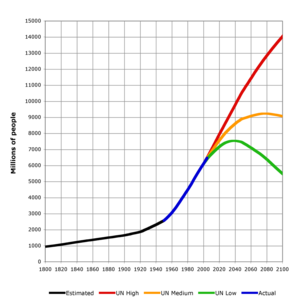
Looks like by all accounts, there are now 7 billion people in the world today. At least that’s what wikipedia says. Here are two blog posts on the subject from the math blogging community. I have to say, I was surprised to see that wolframalpha doesn’t know anything about this important event (I’m sure it won’t be the last time alpha disappoints me). Anyway, I hope everyone feels humbled to be just one of the crowd.

And, happy birthday to Karl Weierstrass!

Why are infinite series so hard to grasp?

I’ve posted on infinite series a few times before. But I was inspired to touch on the topic again because I saw this post, yesterday, over at the Math Less Traveled. Actually, the post isn’t really about infinite series as much as it is about p-adic numbers and zero divisors. I’m excited to read more from Brent on this subject. But I digress.

The point I want to make with this post is that students struggle with wrapping their minds around convergent infinite series, and yet they live with them all the time. Students have inconsistently held beliefs about infinite sums.

The simplest convergent series is a geometric series \sum_{n=1}^\infty a_n=a_1r^{n-1} which converges to \frac{a_1}{1-r}. The easy proof of this fact goes like this: we look at the sum formula for a finite geometric series, s_n=\frac{a_1(1-r^n)}{1-r} and we notice that

\lim_{n\to\infty}\frac{a_1(1-r^n)}{1-r}=\frac{a_1}{1-r}

for |r|<1.

But this proof isn’t very satisfying for the student encountering infinite series for the first time ever. Evaluating the limit feels like ‘magic.’ The idea of adding up an infinite amount of things and getting a finite value is unsettling. I admit, it sounds like quite a lot to swallow. That being said, however, students have no problem declaring the infinite series

0.3 + 0.03 + 0.003 + 0.0003 + \cdots

to be 1/3. It’s not “close to” 1/3, it’s not “approaching” 1/3, it IS EQUAL TO 1/3. And my Precalculus students already accept this as fact. So without even thinking about it, they’ve been living with convergent infinite series all along. Hah!

Once they finally shake their denial, they can more easily accept the convergence of other infinite series like \sum_{n=1}^\infty \frac{1}{n^2}=\frac{\pi^2}{6}. At first when students encounter a series like this, they think, “surely we can’t say the sum is EQUAL to \frac{\pi^2}{6}. It must be close to \frac{\pi^2}{6} or approach it, but equal to?” But the same students make no such distinction with 0.3+0.03+0.003+\cdots = \frac{1}{3}.

So there it is. An inconsistently held belief about infinite sums. To the student: You cannot have it both ways. Either you must agree with, or deny, both of the following equations:

0.3+0.03+0.003+\cdots = \sum_{n=1}^\infty 0.3(0.1)^{n-1}=\frac{1}{3}

1+\frac{1}{4}+\frac{1}{9}+\frac{1}{16}+\cdots = \sum_{n=1}^\infty \frac{1}{n^2}=\frac{\pi^2}{6}

But to believe one equation is true and the other is only ‘kind of’ true is inconsistent. I rest my case. 🙂

Longest mathematical proof

Here’s a recent article from NewScientist.com, Prize awarded for largest mathematical proof by Stephen Ornes:

The largest proof in mathematics is colossal in every dimension – from the 100-plus people needed to crack it to its 15,000 pages of calculations. Now the man who helped complete a key missing piece of the proof has won a prize.

In early November, Michael Aschbacher, an innovator in the abstract field of group theory at the California Institute of Technology in Pasadena will receive the $75,000 Rolf Schock prize in mathematics from the Royal Swedish Academy of Sciences for his pivotal role in proving the Classification Theorem of Finite Groups, aka the Enormous Theorem.

(more)