
from graphjam.com

from graphjam.com
Here’s an RM-spirited Easter egg I painted and thought you’d like :-). Hope everyone had a great spring break!


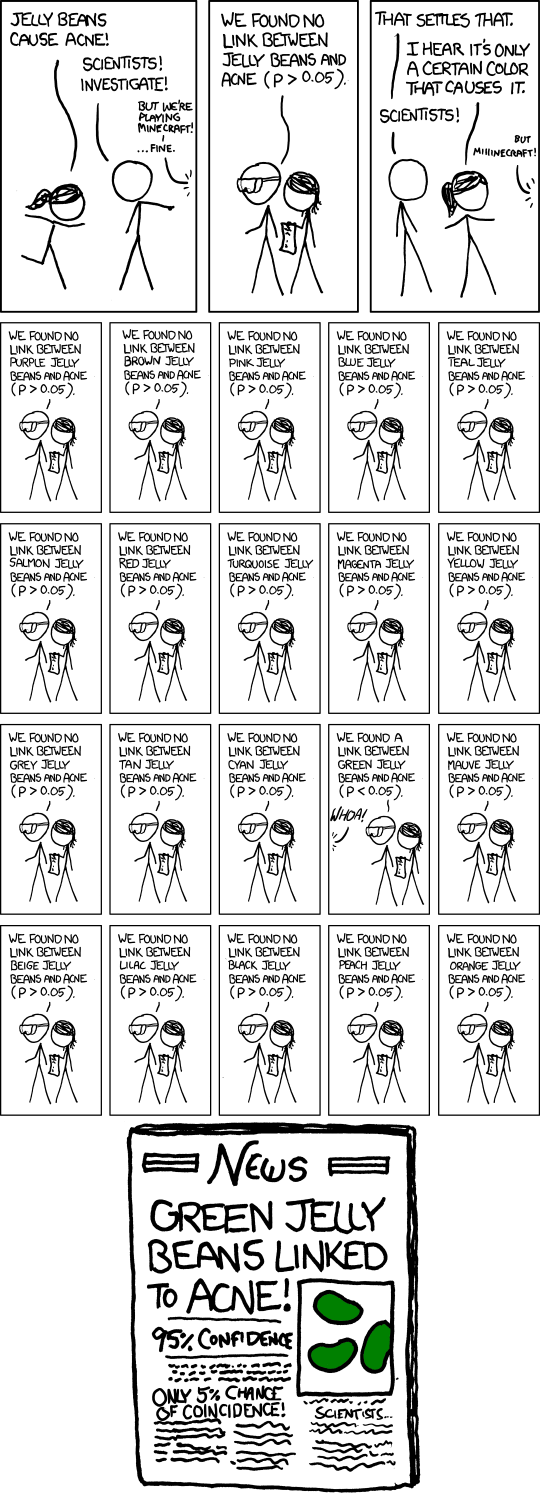
from xkcd.com

from graphjam.com
As I told my classes today, I went to part of a math conference this weekend (this EPADEL MAA meeting, to be specific).
The closing talk was on the Mathematics of Origami by Amanda Serenevy of the Riverbend Community Math Center. Afterward, Amanda taught some of us to fold Hyperbolic Paraboloids with a square of paper. (They are of course approximations to a hyperbolic paraboloid and the paper actually bends in non-rigid ways, which is a bit devious.) Here’s a link to the MAA website where they have instructions on how to make them. And here’s an instructional youtube video, too:
I’ve actually made one before, but I thought I’d highlight it again, since I advertised it in class today and thought my students would appreciate the instructions.
I might report more from the math conference another time soon. I had a good time!
Have you seen this map, which shows the geographic center of the USA and also plots the current median and mean of the population? Very interesting! I got it from another math teacher, but I think the original source is the US Census Bureau (that’s what the bottom of the file says at least!). It inspired me to do some more poking around, and in the wikipedia article I found this map of how the population mean has moved over the last two centuries. Cool.

The movement of the population mean 1790-2010
And of course, here’s the median’s movement over time, too:

Movement of the Population Median
Just two days ago, the Norwegian Academy of Science and Letters awarded mathematician John Milnor the 2011 Abel Prize. Though it was just awarded, the prize is in recognition of decades of work. Here’s a link to the short piece on NPR show All Things Considered. And here’s a direct link to the Abel prize website. And here’s a snippet from the Scientific American article:
Dimension-Cruncher: Exotic Spheres Earn Mathematician John Milnor an Abel Prize
His discovery that some seven-dimensional spheres look different under the lens of calculus spurred decades of research in topology.
John Milnor, an American mathematician best known for the discovery of exotic hyperspheres, was awarded the 2011 Abel Prize, the Norwegian Academy of Science and Letters announced March 23.
Milnor, a professor at Stony Brook University in New York State, got a call at his Long Island home at 6 A.M. informing him he was receiving the $1-million prize—an honor first awarded in 2003 as mathematics’ answer to the Nobel Prizes. “I knew I was a possible candidate, but I certainly didn’t expect it,” says Milnor, 80, who had already earned numerous awards during his career, including a Fields Medal in 1962 and a Wolf Prize in 1989. Milnor is the second consecutive American-born Abel laureate; the 2010 prize went to John Tate of the University of Texas at Austin for his contributions to number theory.
The reason I’m linking to lots of other sources is because I don’t understand Milnor’s results very well :-). But it sounds impressive.
Try dialing (253)243-2504. Go ahead. Do it now. It’s free and fun!
Christopher Poole has set up this dedicated phone number and when you call it, an automated voice reads you the digits of π. Very cool :-).
Here’s more info, courtesy of Mike Nathan at Hackaday:
As you well know, today is March 14th – aka “Pi Day”.
Celebrated in math classrooms around the country, this truly is a celebration that belongs to the geeks. Here at Hack-a-Day, we too love Pi day, though we might not outwardly celebrate it with as much gusto as expressed by some of our readers.
[Chris Poole] is one Hack-a-Day fan who knows how to make the most of this mathematical holiday. He has put together a neat SIP-based phone service that reads Pi aloud to anyone who calls. He is running Asterisk in combination with Perl to read off the numbers, and is using a free SIP DID number to accept the calls. We gave it a shot earlier today, and were greeted by a gentle synthesized voice reading off the numbers of Pi. We’re not sure how many digits it is programmed to handle, as we stopped after about 20, so give him a call and let us know how many digits you make it through.
And here’s a direct link to Christopher Poole’s website.
We had lots and lots of pie, cookies, chips, cheese balls, and other ’round’ snacks today. A fun excuse for a party :-). I showed them a powerpoint with some interesting facts about π. One of my classes even got to whoop and holler at 1:59:26.
I showed some of my classes this:
[youtube:http://www.youtube.com/watch?v=nmXkDbGdD4Q&feature=player_embedded&rel=0%5D
And I showed one of my classes this, which was put up just today by Vi Hart (bonus: see if you can find the small error in this video):
[youtube:http://www.youtube.com/watch?v=jG7vhMMXagQ&feature=player_embedded&rel=0%5D
I’m not sure where I stand on the whole Tau thing. I do think it helps with learning the unit circle and trig values. But I’m not convinced it makes most formulas simpler. And history is a force to be reckoned with. There is lots of mathematical notation that could use some revision, I suppose.
I’ve mentioned Khan Academy before, asking “could your math teacher could be replaced by video?“
Here’s Salman Khan’s TED talk from just a few days ago. I simply love this idea. I’ve been using catchupmath.com with a few students, but this seems even larger in scope. It’s extensive, not just limited to math, free and open, and very powerful. I’d really like to try this.
If you haven’t been to Khan Academy yet, you need to go there now. Check out the videos, do some practice problems. I did a bunch, and it was a bit addictive. You even get points and badges!
I’m going to really think about this: can lecture happen outside of class and practice problems happen IN class?
 Random Walks